Molecular hydrogen water is one of the newer entries in the wellness space and also one of the more scientifically interesting. It rests on a specific, testable idea about how it interacts with the body rather than a vague notion of “purer” or “healthier” water. This page covers what molecular hydrogen water actually is, the mechanism researchers have proposed for it and an honest look at what the current research does and doesn’t establish.
What is molecular hydrogen water?
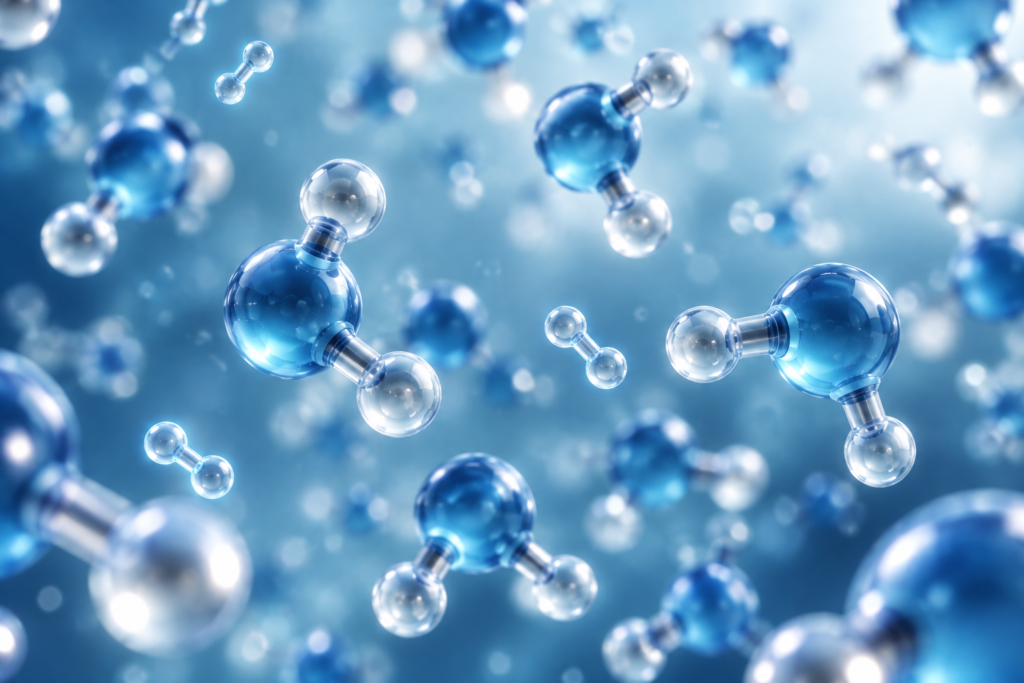
Molecular hydrogen water is ordinary water infused with dissolved hydrogen gas (H2), the same gas that makes up part of the universe’s most abundant element, in a form small and light enough to dissolve into water and be consumed. It’s produced in a few different ways: electrolysis machines that split water molecules to release hydrogen gas into the water, magnesium-based tablets or sticks that react with water to generate hydrogen, and pressurised hydrogen gas dissolved directly into water during bottling, similar in principle to how carbon dioxide is dissolved into a can of soda.
The dissolved hydrogen concentration is usually measured in parts per million (ppm), with most commercial products and research studies working in the range of roughly 0.5 to 1.6 ppm, since water can only hold a limited amount of hydrogen gas in solution at normal pressure.
A brief history
Interest in molecular hydrogen’s biological effects can be traced back further, including some older observations about naturally hydrogen-rich spring water and a scattering of earlier animal research, but the modern scientific foundation for hydrogen water research is generally credited to a landmark 2007 study published in Nature Medicine by Ohsawa and colleagues, which proposed that hydrogen gas could act as a selective antioxidant, capable of neutralizing specific harmful free radicals in the body without disrupting other reactive molecules the body actually needs for normal function. That single study is widely cited as the starting point for the substantial wave of hydrogen research that followed, moving the idea from a niche biochemistry finding into a genuine, if still young, field of study.
From there, the research base grew steadily through the 2010s, expanding from animal studies into small human trials across a widening range of conditions, and the commercial side of the industry grew alongside it. Hydrogen water moved from a research curiosity into consumer products relatively quickly by wellness-industry standards, first as hydrogen-generating water bottles and machines marketed primarily in Japan and South Korea, where much of the early research was based, and later into the broader international wellness and sports-recovery markets as portable hydrogen tablets, canned hydrogen water, and home electrolysis units became widely available.
How does it work?
A uniquely small, diffusible molecule. Hydrogen gas is the smallest, lightest molecule that exists, which gives it an unusual property compared to most compounds studied in nutrition and medicine: it diffuses extremely easily through cell membranes and biological barriers, including the blood-brain barrier, without needing a specific transport mechanism. This is part of why researchers have found it biologically active in tissues that are typically hard for other antioxidant compounds to reach effectively.
The selective antioxidant hypothesis. The central mechanism proposed in the research is that molecular hydrogen selectively neutralizes particularly reactive and damaging free radicals, especially the hydroxyl radical and peroxynitrite, while leaving other reactive oxygen species largely untouched. That distinction matters, because several reactive oxygen species, like hydrogen peroxide and superoxide, are harmful. They also function as genuine cell-signaling molecules involved in immune defense and normal cellular communication. A broad-spectrum antioxidant that neutralizes everything indiscriminately risks interfering with those useful signals, while a selective one, in theory, only removes the specifically damaging radicals. This selectivity is the core theoretical advantage researchers propose molecular hydrogen has over more conventional antioxidants like vitamin C.
Beyond direct radical scavenging. More recent research has proposed that hydrogen’s effects may not be limited to direct antioxidant activity. Some studies suggest it also influences gene expression and cellular signaling pathways related to inflammation and the body’s own antioxidant defense systems. This would mean its effects go beyond simply mopping up existing free radicals. This part of the mechanism is less settled than the core selective-antioxidant hypothesis and is still an active area of investigation.
What the research says

A broad look across conditions. A systematic review examined 25 human studies on hydrogen-rich water, drawn from an initial pool of 590 records, spanning exercise performance, cardiovascular and metabolic health, liver conditions, mental health measures like anxiety and depression and markers of aging and oxidative stress (Read more here: systematic review, MDPI, 2024). The review reported encouraging preliminary findings across several of these domains, including improved athletic performance measures, reduced cholesterol, lower inflammatory markers, and better endothelial function, alongside a consistent finding that hydrogen water appears safe with minimal side effects. But the authors were direct about the state of the field, flagging small sample sizes, short study durations, limited use of placebo controls in some studies and a concern about potential commercial bias in a meaningful share of the existing research. Their conclusion called plainly for larger, longer, more rigorously controlled human trials before the preliminary signal can be treated as established. We think that’s exactly the right way to read this body of research right now: genuinely interesting and consistent in direction, but not yet at the level of evidence that would support strong claims.
A focused trial in adults with obesity. A randomized, placebo-controlled, double-blind trial gave 36 adults with obesity either a liter of hydrogen-rich water or a liter of identical control water daily for eight weeks, measuring appetite, body composition, sleep quality and circulating GLP-1, which is a hormone involved in appetite regulation and now widely recognized through the newer class of GLP-1 medications (HYDRAPPET trial, 2025). The hydrogen water group showed reduced food cravings, improved subjective sleep quality, lower total and LDL cholesterol and increased circulating GLP-1 compared to the control group. We want to be straightforward about one detail here: several of these results landed right at the P = 0.05 threshold conventionally used for statistical significance, which is a real but comparatively marginal result rather than a strong, decisive one. The trial’s sample size of 36 participants is small. It’s a genuinely interesting early signal, particularly given the GLP-1 connection, but it’s one trial and we’d rather flag that clearly than present it as more conclusive than it is.
Taken together, molecular hydrogen water has a coherent, specific and scientifically plausible mechanism behind it. It’s a real signal across a genuinely wide range of preliminary human research and a consistently strong safety profile. What it doesn’t yet have is the kind of large-scale, long-duration, tightly controlled trial evidence that would let anyone make firm claims about specific health outcomes. We think that’s a fair, honest place to land: worth taking seriously as an area of active, promising research, not yet a proven treatment for any particular condition.
Who should be cautious, and why
Hydrogen water has one of the cleaner safety profiles of the modalities on this site, largely because hydrogen gas is non-toxic, doesn’t accumulate in the body, and is simply exhaled through the lungs if it isn’t used. Still, a few situations are worth a mention.
Pregnancy and breastfeeding. As with several other modalities on this site, hydrogen water hasn’t been specifically studied for safety during pregnancy or breastfeeding in controlled trials, so a cautious, doctor-guided approach is reasonable if either applies to you, even though there’s no specific known mechanism for concern.
Kidney conditions or fluid restrictions. Anyone on a medically prescribed fluid restriction, including some people with kidney disease or on dialysis, should factor hydrogen water into their overall daily fluid intake and check with their doctor, since the consideration here is about total fluid volume rather than the hydrogen itself.
Existing medical conditions or medications. As with any supplement or wellness product, if you have an existing health condition or take regular medication, it’s sensible to mention hydrogen water to your doctor, simply as good practice rather than because of a known specific interaction.
As always, check with your doctor if any of the above applies to you.
Frequently asked questions
How much hydrogen is actually in a serving of hydrogen water? Most research and commercial products work in the range of roughly 0.5 to 1.6 parts per million of dissolved hydrogen, which is the practical upper limit water can hold in solution at normal atmospheric pressure without specialized equipment.
Does dissolved hydrogen escape from the water quickly? Yes, and this matters for how these products are packaged. Hydrogen is a very small, light molecule that diffuses out of an open container relatively quickly, which is why hydrogen water is typically sold in sealed aluminum pouches or specially designed containers rather than standard plastic bottle. Hydrogen tablets are meant to be consumed shortly after dissolving.
Is naturally occurring mineral water already hydrogen-rich? Some natural spring waters do contain trace dissolved hydrogen and this was part of the original observational interest in the field. However, the concentrations in ordinary bottled or tap water are typically far below the levels used in the research and commercial hydrogen water products described here.
How is hydrogen water different from alkaline water? They’re often confused, but they’re different things. Alkaline water refers to a higher pH level and doesn’t inherently contain dissolved hydrogen gas, though some products marketed as alkaline water are also produced through electrolysis methods that do add hydrogen. Molecular hydrogen water’s proposed mechanism is specifically about the dissolved H2 gas itself, not the water’s pH.
Is it safe to drink every day? Based on the safety data in the research reviewed above, hydrogen water appears to be very well tolerated with minimal reported side effects across the studies conducted so far. As with anything, check with your doctor if you have a specific health condition or concern.
Why does the research focus on drinking hydrogen water rather than breathing hydrogen gas directly? Both delivery methods appear in the research literature, along with hydrogen baths and injected hydrogen-saline solution in some clinical studies. Drinking hydrogen water is simply the most practical, accessible delivery method for everyday consumer use, which is part of why it’s the form most commonly studied and sold for general wellness purposes, even though inhaled hydrogen can deliver a higher and more sustained concentration in some research settings.
Where this fits alongside our other articles
Molecular hydrogen water shares a conceptual thread with a few of our other articles in that its proposed benefits center on reducing oxidative stress and supporting the body’s own regulatory systems. The mechanism, via an ingested antioxidant gas rather than an external energy source applied to the body, is genuinely distinct from the electromagnetic, mechanical and thermal modalities covered elsewhere on this site.
If you have questions about molecular hydrogen water or want to talk through how it might fit alongside the other approaches we cover, you can get in touch for a Zoom call, an office visit, or a group demonstration.