Light is more than simply what allows us to see. Different wavelengths of light carry energy and interact with the human body in different ways. Modern research has increasingly explored whether selected wavelengths can be used to influence biological processes, encourage tissue repair, reduce pain or inflammation and support other aspects of health and wellbeing.
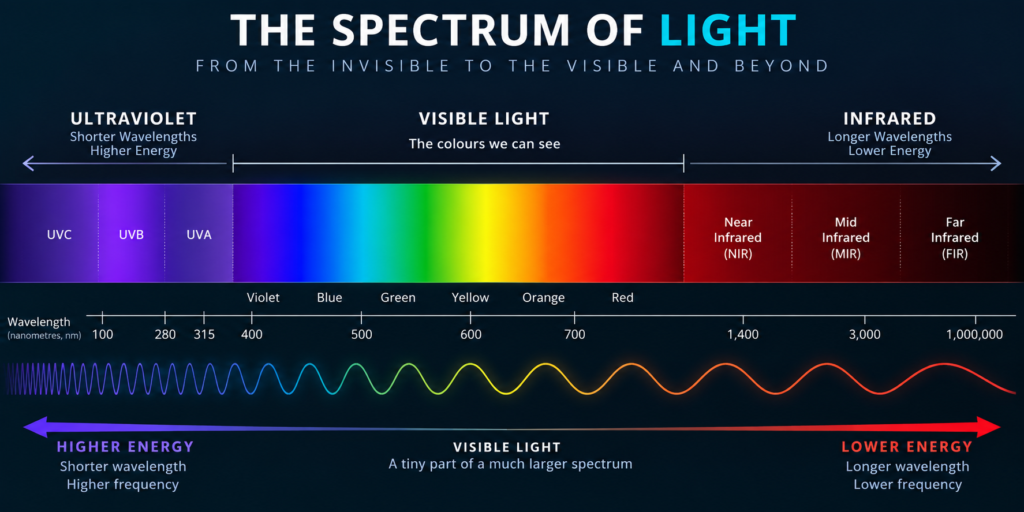
Infrared light sits immediately beyond the red end of the visible spectrum. Our eyes cannot see it, but infrared radiation forms a large part of the electromagnetic energy that surrounds us naturally.
Infrared is a very broad region rather than a single wavelength. It is usually divided into near-infrared (NIR), mid-infrared (MIR) and far-infrared (FIR). Different scientific classification systems use slightly different boundaries. Under one commonly used ISO classification, NIR extends from approximately 780 to 3,000 nanometres (nm), MIR from 3,000 to 50,000 nm and FIR from 50,000 nm to 1 millimetre. In therapeutic literature, however, these terms are not always used consistently.
For modern light-based therapy, near-infrared is particularly important. Red and near-infrared wavelengths—commonly approximately 600–1,100 nm in photobiomodulation research—can interact with cells without the objective being to significantly heat or damage the tissue. This approach is called photobiomodulation (PBM) and was previously often called low-level laser therapy or low-level light therapy.
Far-infrared is also being investigated for biological applications, including specialised FIR-emitting materials. However, it behaves differently in the body and should not simply be regarded as a deeper or stronger version of near-infrared light.
Understanding that difference makes the subject of infrared therapy much easier to navigate.
What is Infrared Light Therapy?
Infrared light therapy involves exposing part of the body to selected wavelengths of infrared radiation using a purpose-designed light source.
Depending on the technology, the source might be LEDs, low-level lasers, infrared lamps or specialised infrared-emitting materials. In photobiomodulation, the purpose is to deliver an appropriate dose of light to tissue without deliberately causing significant thermal damage.
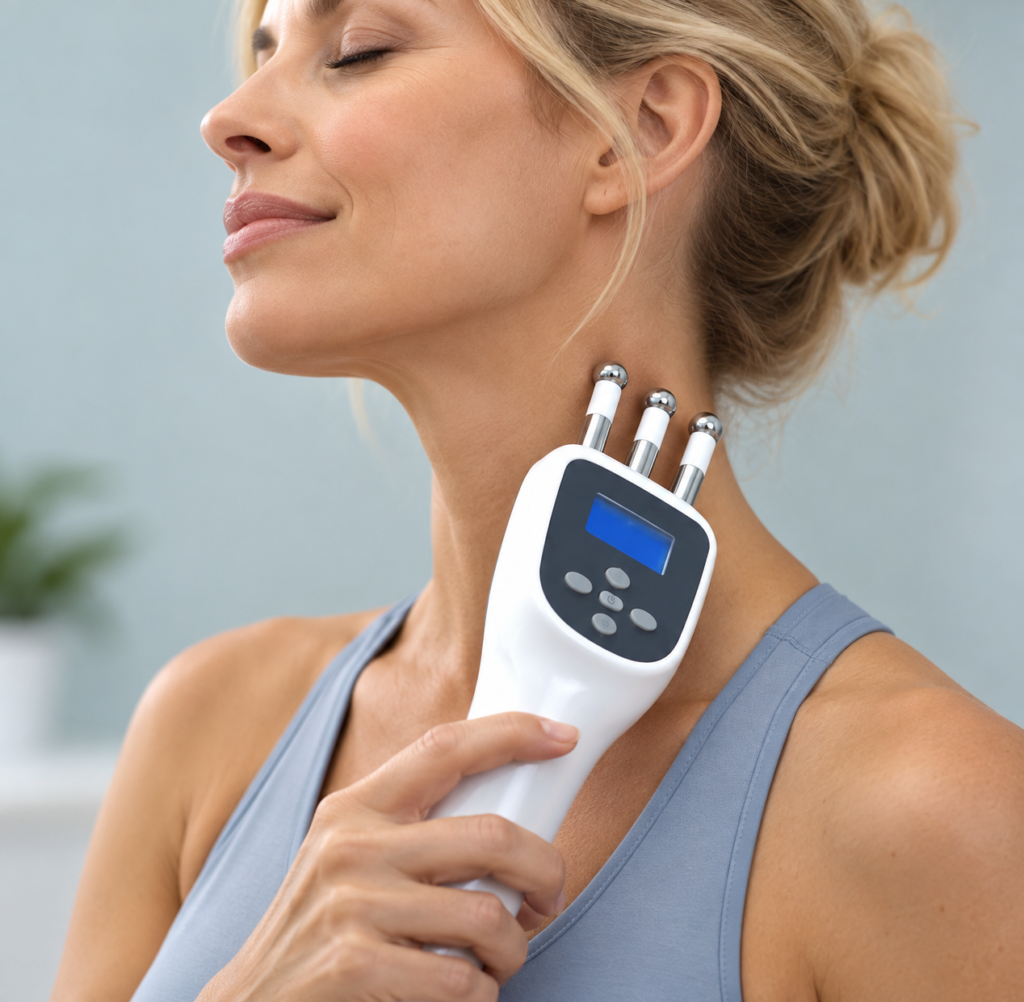
Near-infrared light
Near-infrared is the infrared band closest to visible red light.
This makes NIR particularly interesting therapeutically because wavelengths toward the red/NIR region can travel through skin and other tissues more effectively than many shorter visible wavelengths. Exactly how far useful quantities of light penetrate depends on wavelength, tissue type, pigmentation, blood content, power, treatment distance and other factors. It is therefore misleading to give one universal “penetration depth” for NIR.
Near-infrared light is frequently combined with visible red light in modern PBM equipment. Common research wavelengths include approximately 810, 830, 850, 980 and 1,064 nm, although there is no single wavelength suitable for every application.
NIR photobiomodulation has been studied for applications including pain, wound and tissue repair; inflammation, musculoskeletal conditions, peripheral neuropathy, sports recovery and neurological applications. Some areas have considerably stronger clinical evidence than others.
Far-infrared light
Far-infrared has much longer wavelengths than NIR. These wavelengths interact strongly with water and other molecules and therefore behave quite differently when they reach biological tissue.
FIR has been investigated experimentally for effects on cells and circulation and has also been incorporated into ceramic materials, fabrics, wraps and garments. Some materials absorb energy from their surroundings or the body and re-emit part of it in the far-infrared region.
Research has reported biological effects from some FIR exposures even at levels that do not cause detectable skin heating. However, the mechanisms remain less clearly established and much of the clinical literature surrounding FIR involves heating applications.
For non-thermal light therapy, therefore, near-infrared currently has the substantially more developed clinical research base.
History up till now
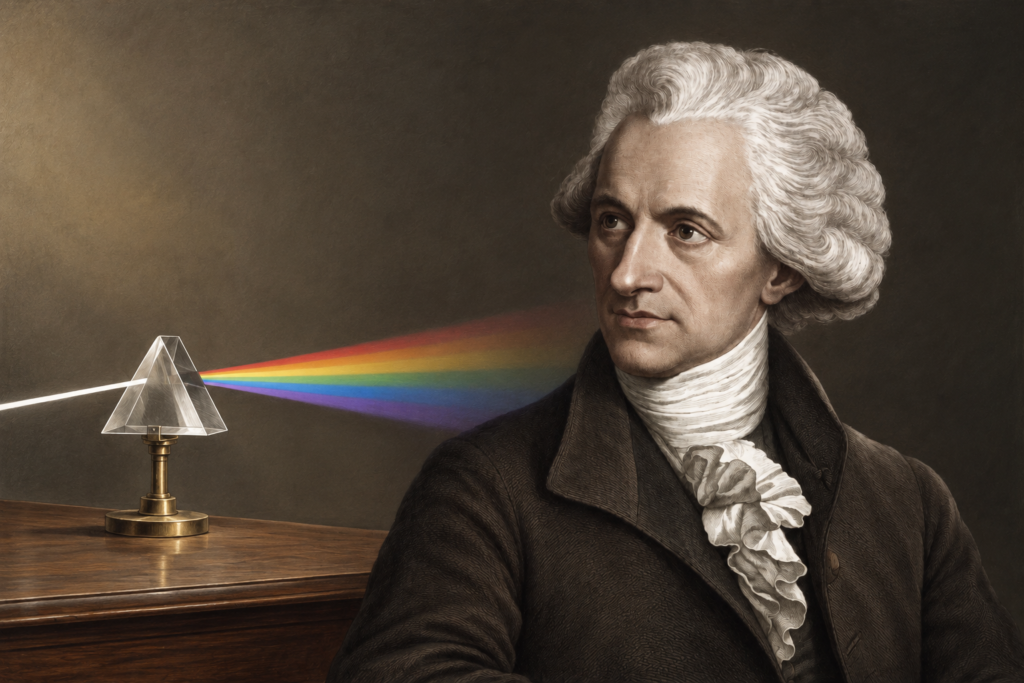
In 1800, astronomer William Herschel passed sunlight through a prism and measured the temperature associated with the different colours. He discovered that the temperature continued to rise when his thermometer was moved beyond the visible red portion of the spectrum. This was into a region where his eyes could see no light. The invisible radiation eventually became known as infrared.
During the nineteenth and early twentieth centuries, scientific understanding of electromagnetic radiation expanded enormously. Artificial light sources also made it possible to investigate particular portions of the spectrum rather than relying upon sunlight.
A major turning point for therapeutic light occurred after the development of the laser in 1960. Hungarian physician Endre Mester became one of the pioneers of what eventually became photobiomodulation. During experiments in the 1960s, Mester investigated the biological effects of relatively low-powered laser exposure. His subsequent work included experiments involving hair growth and wound healing. This helped establish the field initially known as low-level laser therapy.
As the science developed, researchers realised that biological effects were not necessarily unique to lasers. LEDs could also deliver useful wavelengths of red and near-infrared light. The broader term photobiomodulation consequently became increasingly appropriate.
The technology has since moved from laboratory lasers to an enormous range of equipment, from sophisticated medical systems to LED panels and portable consumer devices.
Importantly, PBM is no longer supported solely by small experimental studies.
A major 2025 umbrella review combined 15 previous meta-analyses covering 204 randomised controlled trials and more than 9,000 participants. It found statistically significant effects for 12 of 35 assessed health outcomes. Moderate-certainty evidence supported benefits for particular outcomes involving burning mouth syndrome, knee osteoarthritis, fibromyalgia, androgenetic alopecia and cognitive function. For many other outcomes, however, certainty remained low or very low.
Also in 2025, an international multidisciplinary expert panel published an evidence-based clinical consensus following a systematic literature review. The panel concluded that PBM is a safe treatment modality for adults and identified evidence supporting particular clinical applications including peripheral neuropathy, androgenetic alopecia, certain wound ulcers, pain associated with diabetic foot ulcers and acute radiation dermatitis.
So although light therapy is sometimes presented as a very new wellness trend, the underlying field has actually developed through more than half a century of biomedical research.
How does it work?
The basic idea behind photobiomodulation is surprisingly interesting: cells can respond to light.
When light reaches tissue, some is reflected, some scattered, some transmitted and some absorbed. The absorbed photons are the most relevant to photobiomodulation.
Certain molecules within cells can act as chromophores. These are molecules capable of absorbing particular wavelengths of light. One of the most widely investigated mechanisms of red and near-infrared PBM involves the mitochondria.
Light and the mitochondria
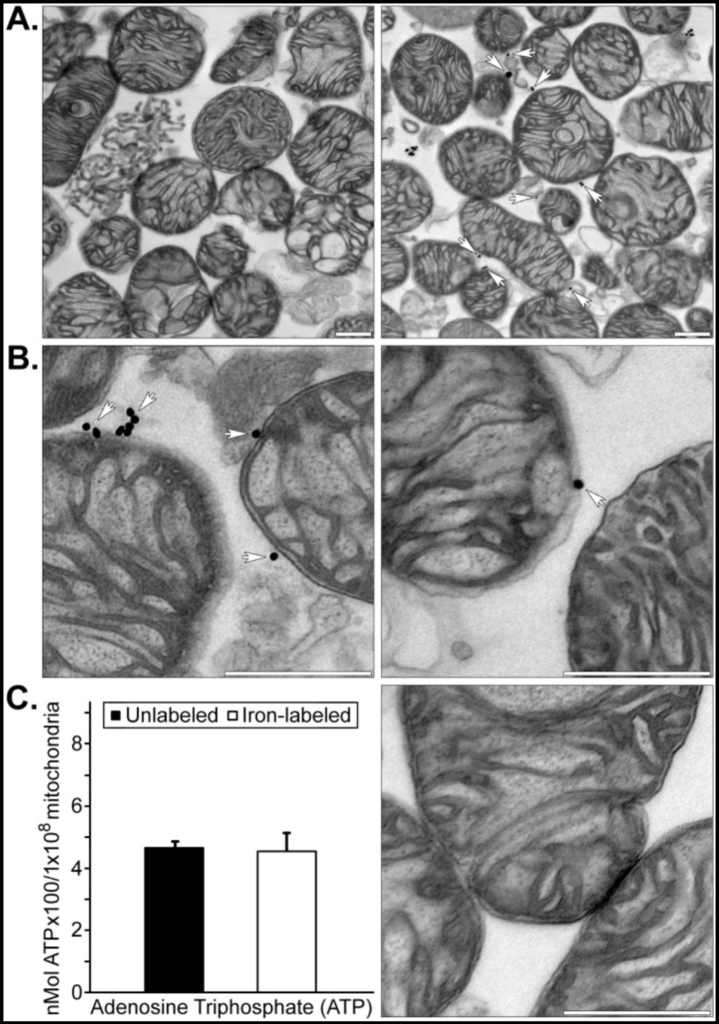
Mitochondria are microscopic structures within our cells that play a central role in producing usable cellular energy.
A mitochondrial enzyme called cytochrome c oxidase has been proposed as an important photoacceptor for red and near-infrared wavelengths. Absorption of light can influence mitochondrial respiratory activity and cellular signalling. Research has associated PBM with changes in ATP (adenosine triphosphate), nitric oxide, reactive oxygen species and calcium signalling.
ATP is sometimes described as the cell’s “energy currency”. It provides readily usable energy for numerous cellular processes.
This has led to the popular belief that red or NIR light “gives cells energy”. That description is oversimplified. The light is not charging cells like a battery. A better description is that appropriate wavelengths and doses of light appear capable of modulating cellular metabolism and signalling pathways.
These initial changes can trigger secondary biological responses. Research has investigated effects on inflammation, blood flow, cell survival, tissue repair and gene expression.
Near versus far infrared
The difference between NIR and FIR is not simply wavelength on a chart. Their interaction with tissue differs substantially.
Near-infrared photons can penetrate relatively effectively through biological tissue, allowing NIR to reach below the skin and making it attractive for photobiomodulation of muscles, joints, nerves and other structures.
This property has also led to experimental transcranial photobiomodulation, where researchers investigate whether NIR delivered through the scalp may influence brain function. Cognitive and neurological applications remain an active area of research rather than a universal established treatment.
Far-infrared radiation is much more strongly absorbed by water, which is abundant in human tissue. Consequently, FIR energy does not behave like NIR travelling through tissue to reach deep cellular targets.
FIR can interact with molecular bonds and water, and laboratory research has suggested cellular responses under certain conditions. However, researchers acknowledge that the mechanisms behind non-thermal FIR biological effects remain incompletely understood.
This leads to a useful practical distinction:
| Near-infrared (NIR) | Far-infrared (FIR) | |
|---|---|---|
| Position | Just beyond visible red | Much longer infrared wavelengths |
| Visibility | Invisible | Invisible |
| Interaction with tissue | Relatively useful tissue penetration | Strong absorption by water and superficial tissue |
| Main light-therapy research | Photobiomodulation | FIR biological effects and infrared-emitting materials |
| Examples | LEDs and low-level lasers | FIR-emitting ceramics, fabrics and specialised emitters |
| Research maturity for non-thermal therapy | Relatively extensive | More limited |
The important point is that NIR and FIR are not interchangeable therapies.
Does more light produce a greater effect?
Not necessarily. One of the particularly interesting characteristics of photobiomodulation is its dose response. Research describes a biphasic response: too little light may produce little or no effect, while increasing the dose beyond an appropriate range does not necessarily increase the benefit and can potentially reduce the desired biological response.
This means wavelength alone tells us relatively little about whether a device or treatment is effective.
Researchers also consider:
Irradiance — how much optical power reaches a given area.
Fluence — the total light energy delivered per unit area.
Treatment duration — how long the tissue is exposed.
Distance — how far the light source is from the body.
Continuous or pulsed delivery — whether the light remains constant or is delivered in pulses.
Treatment frequency — how often sessions are repeated.
This helps explain why two products labelled “near-infrared therapy” may produce very different exposures.
Further reading
For readers who want to examine the research themselves, these are particularly useful starting points.
Effects of photobiomodulation on multiple health outcomes: an umbrella review of randomized clinical trials (2025). This is one of the most useful current overviews because it assesses 15 meta-analyses incorporating 204 randomised trials and more than 9,000 participants. Read the full umbrella review
Evidence-based consensus on the clinical application of photobiomodulation (2025). An international multidisciplinary panel reviewed the evidence and developed clinical recommendations concerning effectiveness and safety. Read the PubMed record
Biological effects and medical applications of infrared radiation (2017). A particularly useful scientific overview explaining NIR, FIR, tissue interactions and potential medical applications. Read the full review
Far infrared radiation: its biological effects and medical applications (2012). Useful for understanding why far-infrared should not simply be treated as another form of near-infrared PBM. Read the full FIR review
Mechanisms and applications of the anti-inflammatory effects of photobiomodulation (2017). A detailed discussion of mitochondria, cytochrome c oxidase, ATP, nitric oxide, oxidative signalling and the biphasic dose response. Read the full review
Who should be cautious and why?
Light therapy has the advantage of being non-invasive, and the 2025 expert consensus concluded that PBM has a favourable safety profile in adults. Nevertheless, appropriate use still matters.
The eyes require particular consideration. Near-infrared light is invisible, which means brightness cannot be judged by looking at it. Powerful LEDs and especially lasers should be used according to their eye-safety instructions. Protective eyewear should be used whenever specified by the manufacturer.
People taking photosensitising medications should check with their doctor or pharmacist before commencing regular light therapy. Some medications and supplements can increase sensitivity to light, although photosensitivity depends on wavelength and not every photosensitising drug necessarily responds strongly to NIR.
People being treated for cancer or who have an unexplained lump, changing skin lesion or other undiagnosed condition should seek medical advice before directing therapeutic light onto the area. PBM itself is being actively researched in oncology—for example, for treatment complications—but this is quite different from independently treating a tumour with a consumer device.
People with significant medical conditions should similarly discuss therapeutic use with an appropriate healthcare professional, particularly when attempting to treat the condition itself rather than using light for general wellbeing.
Finally, pregnancy deserves a precautionary approach. Absence of evidence of harm is not the same as evidence of safety, particularly for direct exposure over the developing fetus. Elective treatment directly over the abdomen or uterus should therefore be discussed with an appropriate healthcare professional.
Infrared light therapy is best understood not as one universal treatment but as a family of technologies. Near-infrared photobiomodulation has developed the strongest research base for non-thermal therapeutic light applications, while far-infrared light has different physical properties and a less developed evidence base when heat-based applications are excluded. Even within NIR therapy, wavelength, intensity and dose matter.
That distinction is important because the science is more interesting—and more credible—than the simple claim that “infrared light is good for you.” Modern research instead suggests that particular wavelengths, delivered at appropriate doses, can influence particular biological processes, with some applications now supported by clinical evidence and many others still being investigated.
Where this fits alongside our other articles
Infrared Light shares a conceptual thread with a few of our other articles. If you have questions about Infrared Light or want to talk through how it might fit alongside the other approaches we cover, you can get in touch. In the Sydney area, we can book an appointment, visit your workplace or run a demo for you and your friends. Further away, we’re happy to talk it through on a Zoom call.