Vibration and percussion therapy covers a broader range of devices than people usually assume: everything from whole-body vibroacoustic chairs used in clinical and therapeutic settings to the handheld percussion massagers that have become a staple of gym bags and recovery routines. The Shaken Massager sits in the second category, and this page focuses on that mechanical, percussion side of things. Its radiofrequency side has its own separate research base, covered on our RF therapy pillar.
What is vibration and percussion therapy?
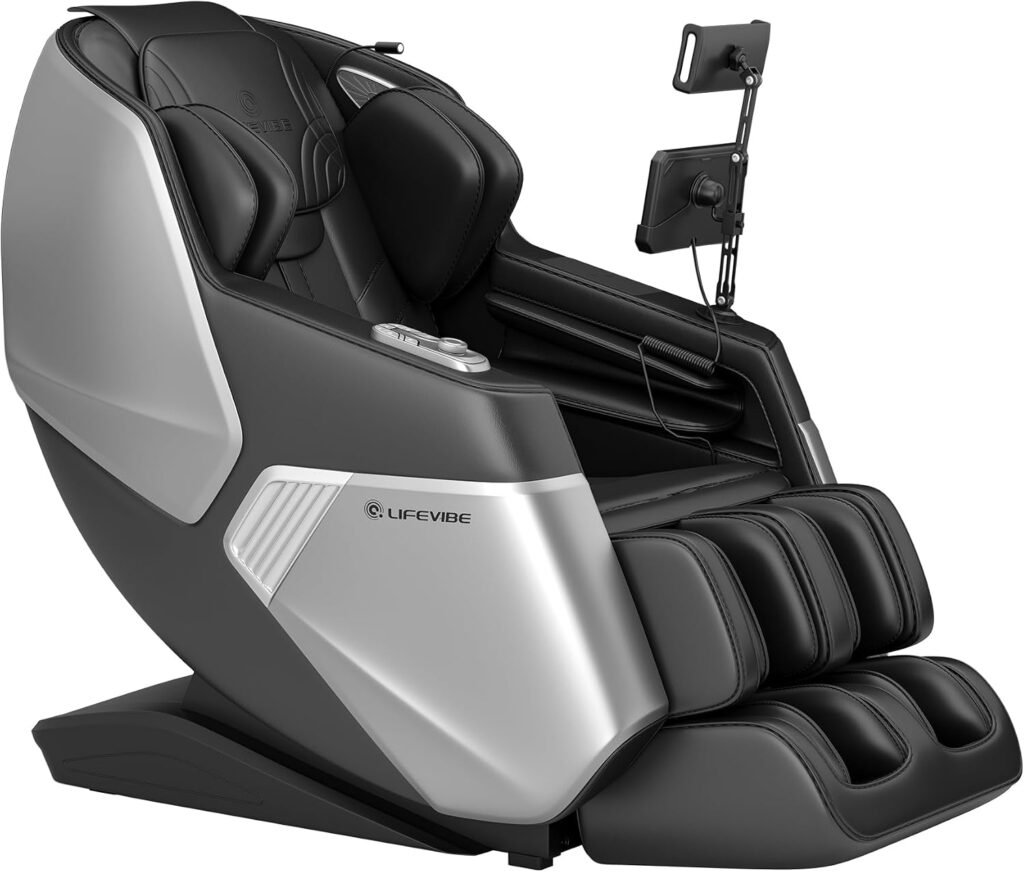
Two related but distinct approaches fall under this umbrella. Vibroacoustic therapy applies low-frequency sound vibration to the whole body, usually through a specialized chair, table, or mat that the person sits or lies on for an extended session. Percussion therapy, the category the Shaken Massager belongs to, delivers rapid, targeted mechanical pulses to a specific muscle or area through a handheld device, typically at a much higher frequency and for a much shorter duration per spot.
Both work on the same basic principle: mechanical vibration transmitted into tissue, muscle, and the nervous system produces measurable physiological responses. Where they differ is delivery. A vibroacoustic chair session might run twenty minutes and treat the whole body passively. A percussion device session is active and targeted, typically a minute or two per muscle group, and is usually self-administered rather than something you lie back for.
A brief history
Vibroacoustic therapy has the older, more established research lineage. Norwegian special-education teacher Olav Skille began developing the approach in the late 1970s and early 1980s, working initially with children who had severe disabilities, and published foundational work with Tony Wigram and Lyn Weekes in 1989 describing low-frequency sound as a physically effective treatment tool in its own right, distinct from music therapy’s more interactive, psychological approach (Read more here: Skille, Wigram, and Weekes, 1989, Journal of British Music Therapy). That early Scandinavian work applied vibroacoustic therapy to muscle tightness and swelling in people with significant physical disabilities, and laid the groundwork for the clinical vibroacoustic equipment still used in some therapeutic and aged-care settings today.
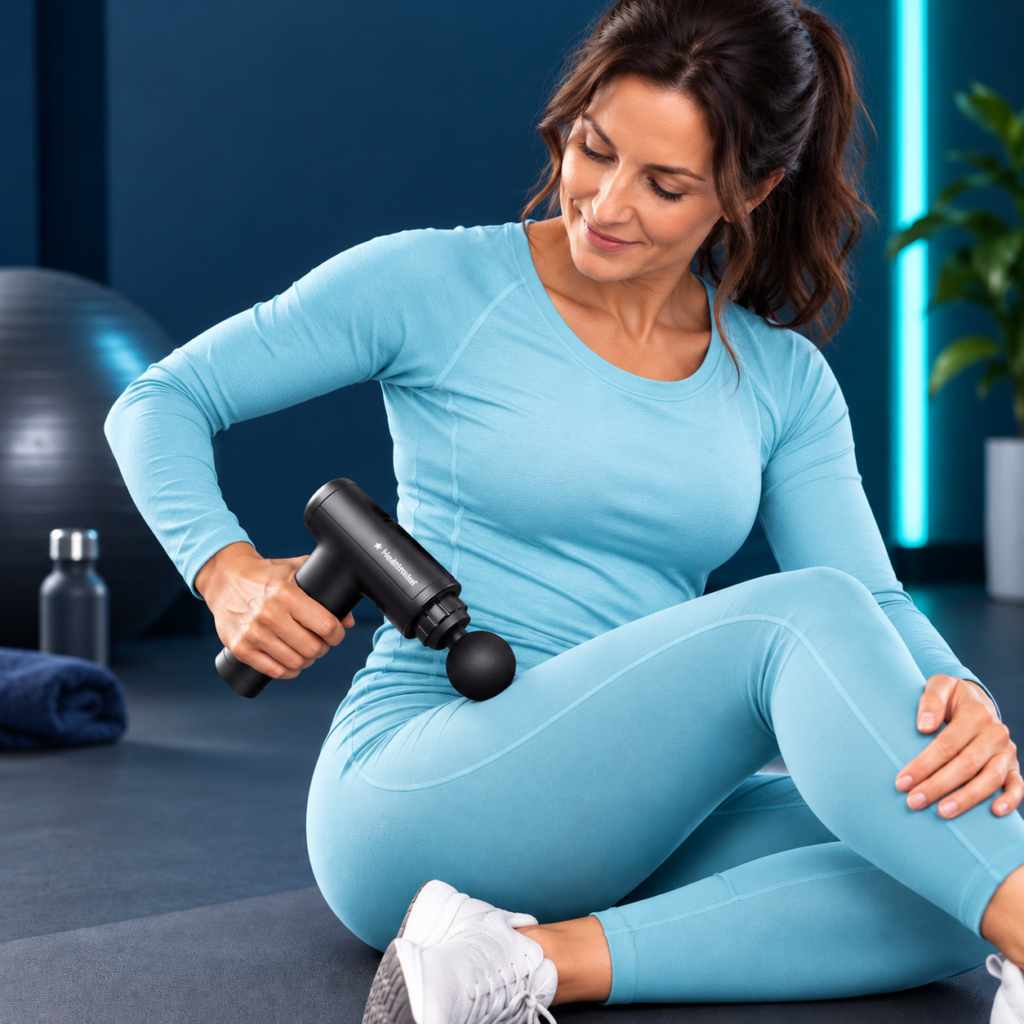
Handheld percussion massage is a much newer category, commercially speaking. Percussive massage guns moved from a niche physical-therapy tool into mainstream fitness and recovery use over the past few years. The demand was driven by athletes and physical therapists popularizing them before consumer versions followed. What started as equipment mostly seen in professional sports training rooms is now standard kit in gym bags and physiotherapy clinics alike. The research base has grown alongside that popularity, with a wave of studies on percussion devices specifically published just in the last two or three years, catching up to a modality that consumer adoption outpaced for a while.
How does it work?
Mechanical vibration and percussion stimulate several systems at once, which is part of why the effects show up across such a wide range of measures.
At the muscle and tissue level, rapid percussive input is thought to increase local blood flow and stimulate mechanoreceptors, the nerve endings responsible for sensing pressure and movement. That stimulation is part of the basis for gate control theory, a well-established model in pain science describing how certain types of sensory input can reduce the perception of pain by effectively competing with pain signals for the nervous system’s attention. Percussion is also proposed to help break up localized muscle tension and support recovery after exercise-induced muscle damage, partly through improved circulation and partly through direct mechanical effects on the muscle tissue itself.
At the whole-body level, low-frequency vibration appears to influence the autonomic nervous system, the branch that governs the body’s stress response and its opposite, the rest-and-recovery state. Some of the research below measured this directly through heart rate variability, a marker of how well the nervous system shifts between those two states.
There’s also a proposed lymphatic angle: rhythmic mechanical pressure, applied in the direction of lymph flow, is thought by some practitioners to support lymphatic drainage and reduce localized swelling, building on the same edema-reduction work that appeared in Skille and Wigram’s original vibroacoustic research. This is a more practitioner-observed effect than a heavily trial-tested one, and we’d rather flag that distinction than present it as equally well-established as the muscle recovery findings below.
Choosing intensity and session length
Percussion devices typically offer several speed settings and interchangeable head attachments, and getting the most benefit with the least risk of overdoing it comes down to matching both to the job. A flatter, broader head spread across a larger muscle group like the quads or back is generally gentler than a pointed head concentrated on a small area, which is better reserved for specific tight spots and shouldn’t be used directly on a joint, bone, or tendon. Lower intensity settings are the sensible starting point for anyone new to percussion therapy, or for use immediately after an intense workout when muscle tissue is already fatigued, with intensity increased gradually as tolerance builds. The research above used relatively short sessions per muscle group, and that’s consistent with general guidance: percussion therapy is meant to be a targeted few minutes per area, not an extended session in one spot.
What the research says
The research splits fairly cleanly along the same line as the two categories above: vibroacoustic studies tend to measure whole-body, nervous-system-level outcomes, while percussion-specific studies tend to measure localized muscle recovery.
Stress and the nervous system. A 2022 pilot randomized controlled trial gave university students a twenty-minute low-frequency sound vibration session and measured heart rate variability alongside self-reported stress and muscle tension. The vibration group showed a statistically significant shift toward parasympathetic (rest-and-recovery) nervous system activity compared to the control group, though self-reported stress and muscle tension didn’t differ significantly between groups, a reminder that a measurable physiological change and a noticeable subjective one don’t always move together (Read more here: Kantorová et al., 2022, Frontiers in Psychology).
Muscle recovery and DOMS. A 2025 randomized controlled trial compared percussion massage therapy against static stretching for delayed onset muscle soreness following a fatiguing squat protocol in physically active young men. The longer percussion session outperformed both static stretching and a shorter percussion session at 48 hours post-exercise, with better pain scores, knee range of motion, jump performance and muscle activation patterns. The authors concluded percussion therapy was more effective than stretching for DOMS recovery in this group, and that a longer session produced a better result than a shorter one (Read more here: Li et al., 2025, Frontiers in Public Health).
Acute muscle fatigue. A randomized clinical trial examined percussive massage applied directly after a quadriceps fatigue protocol in physically active men, tracking muscle cross-sectional area, strength and late-onset pain. It adds to a small but growing body of trial-level evidence specifically testing percussion devices, rather than vibroacoustic chairs, on recovery outcomes (Rosa Castilho et al., 2026, Physiotherapy Research International).
We noted that a meaningful share of the foundational vibroacoustic literature, including Skille and Wigram’s own work, comes from whole-body chair and table sessions rather than handheld percussion devices. The mechanism is related, mechanical vibration acting on tissue and the nervous system, but a study on a vibroacoustic chair isn’t a study on a percussion massager and we don’t want to blur that distinction. The percussion-specific research is newer and smaller in volume, though it’s grown quickly and the early trial results are consistent with what the older vibroacoustic literature would predict.
Who should be cautious, and why
Percussion and vibration devices are generally very safe for healthy users, but there are real reasons certain groups should be careful or check with a doctor first.
Blood clots or clotting disorders. Applying mechanical pressure over an area with a blood clot, or in someone with a diagnosed clotting disorder, carries a real risk of dislodging a clot. This is one of the more serious cautions in this category and worth taking seriously rather than treating as boilerplate.
Osteoporosis or fracture risk. Percussive force delivered directly over a bone with reduced density, or near a recent fracture, could plausibly cause harm. People with diagnosed osteoporosis or a healing fracture should get clearance from their doctor before using a percussion device on or near the affected area.
Pregnancy. As with several other modalities on this site, percussion and vibration devices haven’t been specifically studied for safety during pregnancy, particularly on or near the abdomen. That’s an absence of research rather than evidence of harm, but it’s a sensible place to default to caution.
Acute injury or active inflammation. Applying percussion directly to a fresh injury, a strain in its acute inflammatory phase, or an area that’s swollen and hot to the touch can worsen the injury rather than help it. The general guidance in sports medicine is to wait until the acute inflammatory phase has passed before introducing mechanical therapy to the area.
Varicose veins and skin conditions. Direct percussion over varicose veins, open skin, a rash, or a healing wound isn’t recommended. Working around the area, rather than on it, is the safer approach. (Read more about the P90+)
In every case above, the message is the same as elsewhere on this site: check with your doctor if any of these apply to you, and we cover device-specific guidance in the individual product review as well.
Frequently asked questions
Is percussion massage the same as a regular massage? Not quite. A percussion device delivers rapid, repeated mechanical pulses rather than the sustained pressure and kneading of manual massage. Both can relieve muscle tension, but they work through somewhat different mechanisms, and many people use them together rather than as substitutes for each other.
How long should I use a percussion device on one muscle? The research above used sessions in the range of a couple of minutes per muscle group, with a longer session outperforming a shorter one for next-day recovery. Follow the specific guidance in your device’s manual, since intensity and head attachment both affect how long is appropriate.
Can I use it every day? For most healthy adults, yes, daily use on healthy muscle tissue is common. The cautions above matter more than frequency for most people.
Does it actually reduce muscle soreness, or does it just feel good in the moment? Based on the research above, both. The immediate sensation is real, but the 2025 DOMS trial found measurable next-day benefits in pain, range of motion and performance, not just an in-the-moment effect.
Should I use it before or after exercise? Both have a place with different intent. A brief, lower-intensity pass before exercise is often used to help warm up muscle tissue and increase local blood flow ahead of activity. The recovery research above focused on after exercise, using it to address soreness and support the muscle’s return to baseline. Neither use excludes the other.
Is vibroacoustic therapy the same thing as a percussion massager? Related, not identical. Vibroacoustic therapy is typically a passive, whole-body session through a specialized chair or table, and percussion devices are active, targeted, and handheld. We’ve grouped them on this page because they share a mechanical-vibration mechanism, but they’re genuinely different pieces of equipment with somewhat different research bases behind them.
Where this fits alongside our other articles
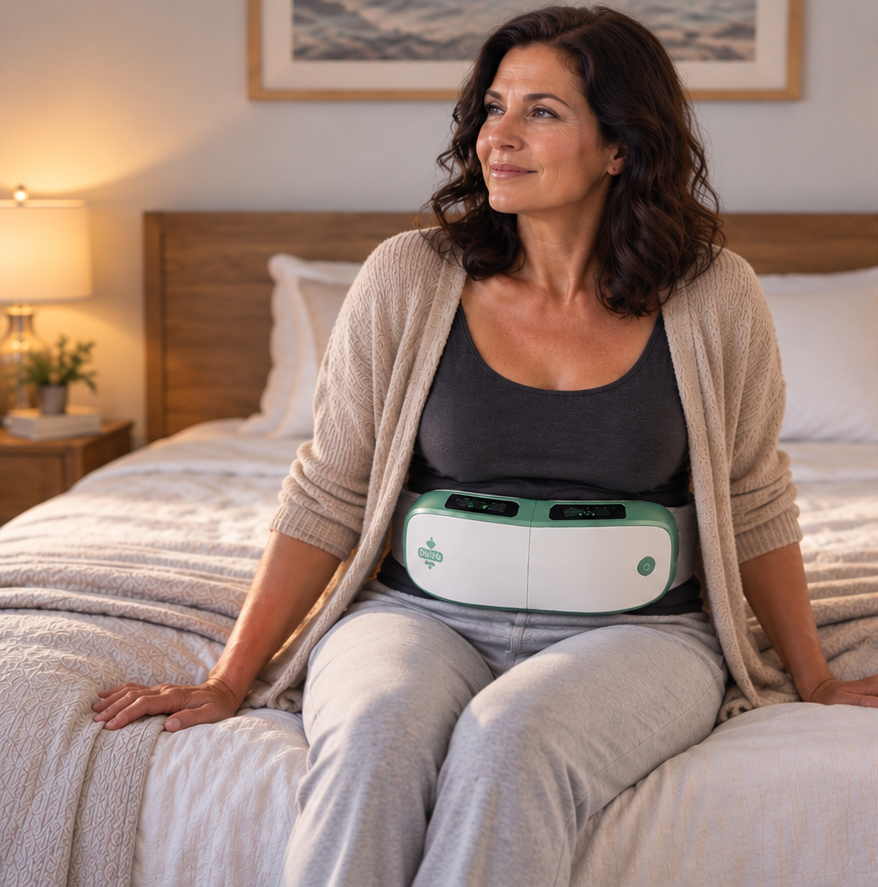
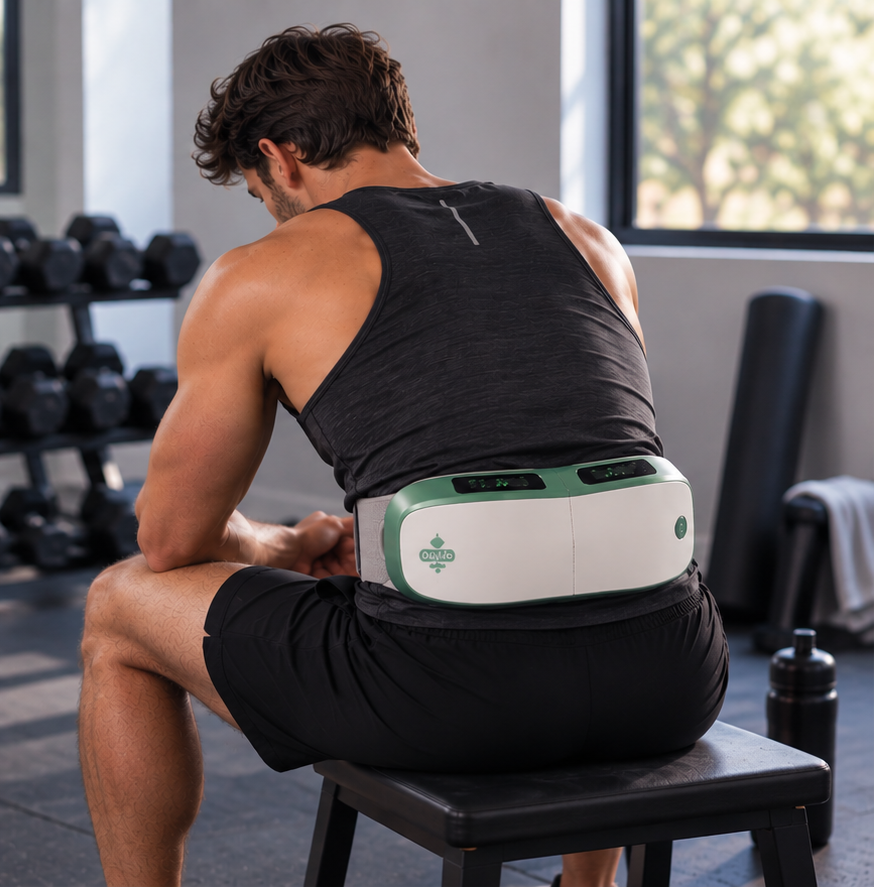
The Olylife Shaken Massager also uses radiofrequency, a different mechanism entirely from the percussion side covered here. If you’re weighing the device as a whole, our radiofrequency therapy article covers that half of what it does, including the evidence for RF specifically around pain, circulation, and musculoskeletal use. Together, the two articles will give you a bigger picture of what the device brings to a recovery routine.
If you have questions about which approach suits what you’re dealing with, or want to see the Shaken Massager in person, you can get in touch for a Zoom call, an office visit, or a group demonstration.