Far-infrared heat is one of the most familiar entries on this list of wellbeing modalities, since most people have already encountered it in the form of an infrared sauna, even if they’ve never thought of it as a distinct therapy with its own research base. It’s also one of the more scientifically active areas right now, with a wave of mechanistic and clinical research published in just the last year or two. This page covers what far-infrared heat actually is, how it’s thought to work at a cellular level, and what the current evidence does and doesn’t support.
What is far-infrared heat therapy?
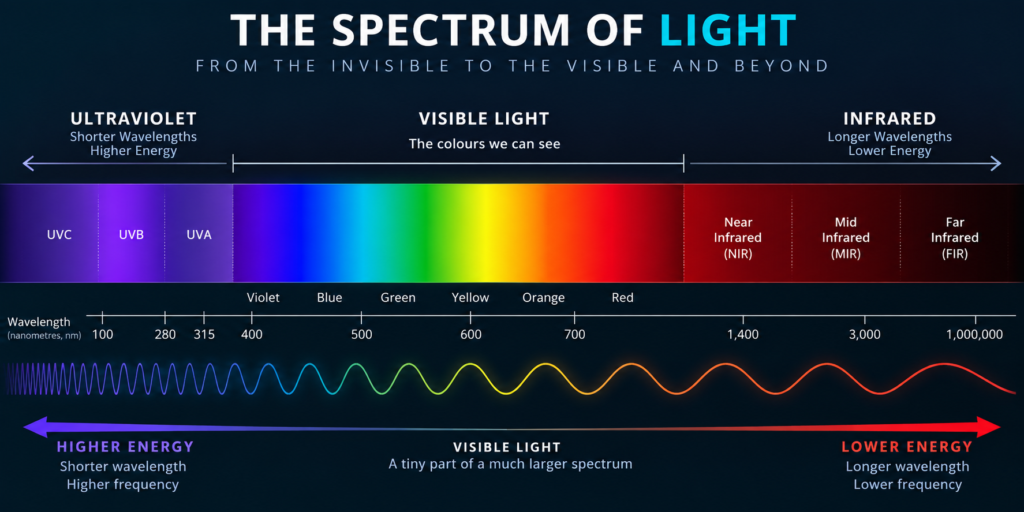
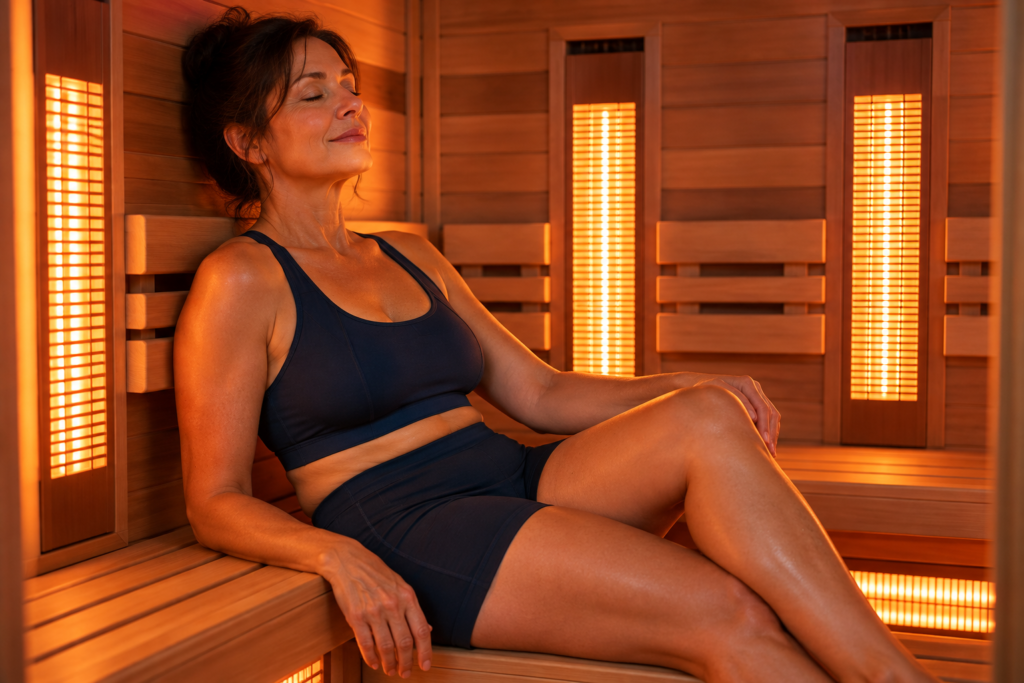
Infrared light sits just beyond the red end of the visible spectrum and is divided into three bands based on wavelength: near-infrared, mid-infrared, and far-infrared. Far-infrared covers the longer wavelengths, roughly 3 to 1000 micrometers, and is the band most associated with the gentle, penetrating warmth of infrared saunas, heat lamps, and heated wraps. Unlike a traditional sauna, which heats the surrounding air to a high temperature and relies on that air to warm the body, far-infrared devices emit radiant energy that’s absorbed directly by skin and superficial tissue, producing a comparable feeling of warmth at a lower ambient air temperature.
That distinction, radiant heating of tissue rather than heating of the surrounding air, is the basis for most of far-infrared’s proposed benefits and is also why it’s marketed as a gentler alternative to a traditional steam or dry sauna for people who find the higher temperatures of those options difficult to tolerate.
A brief history
Infrared light itself was discovered in 1800 by astronomer William Herschel, who found that a thermometer placed just beyond the red end of a light spectrum, in a region with no visible light at all, registered a higher temperature than the visible colors themselves. That discovery established infrared as a real, measurable form of energy long before it had any therapeutic application.
Therapeutic use of infrared heat followed decades later, first in the form of infrared lamps used in general physiotherapy from the late nineteenth and early twentieth centuries onward, and later in dedicated far-infrared sauna cabins, which became commercially available from the 1960s onward and grew substantially in popularity from the 1990s as manufacturers refined the emitter technology and made home units more accessible. Far-infrared heat has since become one of the more mainstream, mass-market wellness modalities, appearing in everything from dedicated sauna cabins and heated wraps to portable heating pads and infrared-emitting fabric.
How does it work?
Penetration and heat generation. Far-infrared wavelengths are absorbed by water molecules and other tissue components close to the skin’s surface, producing a mild, sustained warming effect in superficial and subcutaneous tissue. This is a gentler, shallower form of heating than the deeper tissue heating produced by radiofrequency, covered on our radiofrequency therapy page, though both work by generating heat directly in tissue rather than only warming the surrounding air or surface.
Cellular signaling pathways. Recent mechanistic research describes far-infrared heat as doing more than simply raising tissue temperature. It appears to activate mechanosensitive and thermosensitive receptors in cell membranes, known as transient receptor potential channels, which in turn trigger a cascade of downstream signaling. Part of that cascade activates an enzyme called endothelial nitric oxide synthase, increasing the availability of nitric oxide, a molecule that relaxes blood vessels and supports healthy blood flow (Read more here: Circulation Reports, 2026, mechanisms review).
Antioxidant and anti-inflammatory signaling. The same research describes far-infrared exposure as activating the Nrf2 pathway, a cell’s built-in antioxidant response system, while suppressing a different pathway, NF-κB, that drives inflammatory signaling. Together, these effects are proposed to reduce oxidative stress and shift immune cells toward a more anti-inflammatory state. Far-infrared exposure is also associated with increased expression of vascular endothelial growth factor, a signal involved in forming new blood vessels, which is part of the proposed basis for its use in tissue repair and wound healing.
Not an exercise substitute. A randomized crossover trial compared infrared sauna bathing to moderate cycling and to rest in ten healthy women, measuring core temperature, blood pressure, arterial stiffness and heart rate variability. Infrared sauna raised core body temperature to a similar degree as exercise, but without exercise’s increase in breathing rate, it didn’t produce the same blood pressure or heart rate variability changes as cycling did (Read more here: infrared sauna vs. exercise crossover trial, ScienceDirect). The researchers concluded that far-infrared sauna’s physiological effects come from the body’s response to heat itself, not from mimicking the cardiovascular demands of exercise. We think that’s a useful, honest data point given how often infrared saunas get marketed as an exercise substitute: the heat response is real, but it isn’t the same thing as a workout.
What the research says
Cardiovascular and vascular applications. A 2025 review of far-infrared and related heat therapies for cardiovascular health, including peripheral arterial disease, described improvements in endothelial function and cited specific findings such as improved hemodialysis vascular access flow and better ankle-brachial index scores, a measure of blood flow to the legs, in hemodialysis patients with peripheral artery disease (Read more here: cardiovascular and PAD review, Frontiers, 2025). The review was direct about the state of the evidence, though, noting that high-quality, large-scale randomized trials remain scarce in this area. It pointing out that far-infrared heat therapy practices aren’t currently approved by the FDA as a medical treatment for any condition. The mechanistic and preliminary clinical signals are genuinely promising, but the evidence base hasn’t yet reached the size and rigor that would support strong clinical claims.
Musculoskeletal pain and chronic conditions. A systematic review pulled together 13 studies on infrared radiation for musculoskeletal pain, covering osteoarthritis, fibromyalgia, ankylosing spondylitis, sports injuries, and myofascial pain (Read more here: systematic review, MDPI, 2026). The results were genuinely mixed. Fibromyalgia showed the most consistent benefit, with some studies reporting improvements in fibromyalgia impact scores exceeding 50 percent. Osteoarthritis results were inconsistent across studies. Chronic low back pain evidence was described by the review’s authors as ambivalent, with infrared performing no better than placebo in at least one large trial. Sports injury recovery fared the worst in this review: infrared-emitting compression clothing showed no measurable short-term recovery benefit in the studies examined. The review also flagged small sample sizes and a lack of long-term follow-up as limitations across most of the included studies, and the variation in devices, dosing, and outcome measures used meant the authors couldn’t pool the results into a single combined estimate.
Taken together, the honest summary is this: far-infrared heat has a genuinely interesting and increasingly well-mapped cellular mechanism, real signal in cardiovascular and vascular applications. Its clearest, most consistent musculoskeletal benefit so far in fibromyalgia specifically, with weaker or more mixed support for other pain conditions and sports recovery. We’d rather present that nuance than oversell a modality that’s still actively being researched.
Who should be cautious, and why
Far-infrared heat is generally very well tolerated, and its gentler ambient temperature compared to a traditional sauna is part of its appeal, but there are still real situations where caution or a conversation with a doctor first is warranted.
Dehydration and heat-related illness. Any heat therapy, including far-infrared, causes sweating and fluid loss. Drinking water before and after a session and avoiding overly long sessions helps reduce the risk of dehydration, lightheadedness or heat exhaustion.
Low blood pressure or fainting history. Heat exposure causes blood vessels to dilate, which can lower blood pressure further in people who already run low, or in anyone with a history of fainting or dizziness on standing. This group should approach far-infrared sessions cautiously and consider a shorter session to start.
Cardiovascular conditions. While some of the research above points to potential cardiovascular benefits, anyone with an existing heart condition, uncontrolled high blood pressure, or a recent cardiac event should get their doctor’s clearance before starting regular heat therapy sessions, since the cardiovascular demands of heat exposure aren’t the same for everyone.
Pregnancy. Elevated core body temperature during pregnancy, particularly in the first trimester, is generally advised against, which extends to far-infrared sauna and heat sessions. Pregnant users should check with their doctor before use.
Impaired sensation or heat intolerance. Anyone with reduced sensation in the skin, from diabetic neuropathy, nerve damage, or another cause, is at higher risk of a burn, since they may not feel excessive heat building. Certain conditions involving heat intolerance, including some cases of multiple sclerosis, also warrant caution and a doctor’s guidance before use.
Medications that affect heat regulation or blood pressure. Some medications, including certain blood pressure medications, diuretics, and drugs that affect sweating, can change how the body handles heat exposure. Check with your doctor or pharmacist if you’re on regular medication and are new to heat therapy.
As always, check with your doctor if any of the above applies to you, and start with shorter, lower-intensity sessions if you’re new to far-infrared heat.
Frequently asked questions
Is far-infrared the same as a traditional sauna? No. A traditional sauna heats the surrounding air, which then heats your body, typically at high ambient temperatures. Far-infrared devices emit radiant energy absorbed directly by your skin and tissue, producing a comparable warming sensation at a notably lower air temperature, which many people find more comfortable and easier to tolerate for longer sessions.
Does far-infrared heat replace exercise? No, and the research above is fairly clear on this point. Far-infrared sauna raises core temperature in a way that resembles some effects of exercise, but the underlying cardiovascular and heart rate variability responses aren’t the same. It’s a heat therapy with its own distinct effects, but doesn’t substitute for physical activity.
How long should a far-infrared session last? Session lengths in the research above vary, but many studies and manufacturer guidelines use sessions in the 20 to 45 minute range. Starting with a shorter session and building up as your tolerance for the heat becomes clear is a sensible approach, especially the first few times.
Is far-infrared heat the same as red light or near-infrared light therapy? No. Near-infrared and red light sit at much shorter wavelengths and are generally associated with different proposed mechanisms, largely related to light absorption by cellular components rather than heat generation. Far-infrared works primarily through the sustained warming effect described above.
Can I use far-infrared heat every day? Many people use infrared sauna or heat devices several times a week without issue, and some use it daily. Whether daily use is appropriate for you depends on the cautions above, so check with your doctor if any apply, and pay attention to how your body responds.
Where this fits alongside our other articles
Far-infrared heat shares some conceptual ground with a couple of our other articles, particularly PEMF therapy and grounding and earthing, in that all three are proposed to support circulation and the body’s own repair processes through different underlying mechanisms. We think it’s worth reading them together if you’re trying to understand how these modalities compare rather than overlap.
If you have questions about the different modalities or want to talk through how it might fit your situation, you can get in touch for a Zoom call, an office visit, or a group demonstration.