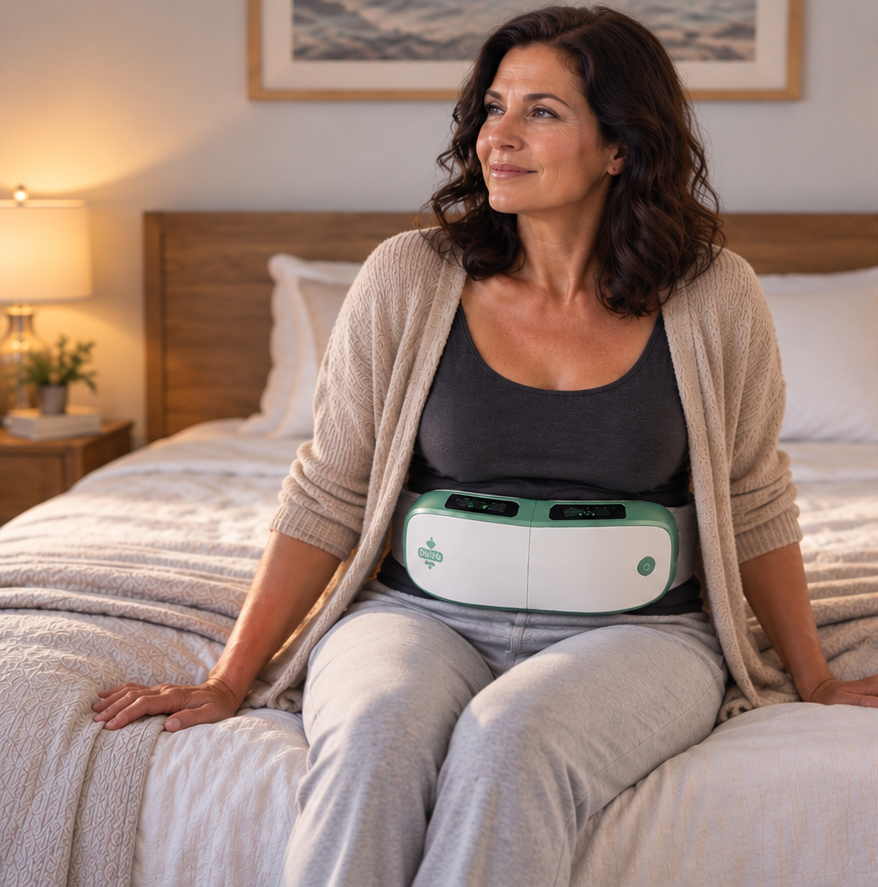
The Shaken Massager combines two distinct mechanisms in one device: mechanical percussion, covered on our vibration and percussion therapy article, and radiofrequency energy, the subject of this page. Radiofrequency (RF) is one of the older, more established categories of energy-based therapy, with decades of use in clinical and consumer settings. It’s also one of the more misunderstood, partly because the term covers everything from a handheld wellness device to an invasive medical procedure performed by a pain specialist. Sorting out which is which is the centerpiece of this page.
What is radiofrequency therapy?
Radiofrequency therapy uses electrical current in the radio wave portion of the electromagnetic spectrum, typically somewhere between 0.3 and 750 megahertz depending on the device, to generate heat within tissue. The current doesn’t heat tissue directly the way a heating pad does from the outside. Instead, it causes polar molecules, water chief among them, to oscillate rapidly as they try to align with the alternating electrical field. That molecular friction generates heat from within the tissue itself, which is why RF is often described as producing a deeper, more controlled heating effect than surface heat sources achieve on their own.
That heating effect underpins RF’s use across a wide range of applications: skin tightening and collagen stimulation in aesthetic settings, muscle relaxation and pain relief in physiotherapy and sports recovery. In an entirely different and invasive context, as covered below, it can also cover the destruction of specific nerve tissue for chronic pain management. The consumer and physiotherapy applications, non-invasive and applied through the skin, are what’s relevant to a device like the Shaken Massager and what the rest of this page focuses on.
A brief history
Radiofrequency energy has been used in medicine since the early twentieth century, initially as electrosurgery, using RF current to cut and cauterize tissue during procedures. That surgical lineage is part of why RF later developed such a wide range of applications: once the basic principle, that RF current reliably generates controlled heat in tissue, was established, researchers and manufacturers began adapting it for gentler, non-surgical purposes.
Non-surgical RF, delivering heat to tissue without cutting or ablating it, gained real commercial momentum from the 1990s onward as manufacturers designed devices that could deliver energy safely through the skin’s surface. Monopolar devices, sending current from a single treatment electrode to a distant grounding pad, were among the first widely adopted designs, prized for reaching deeper tissue layers. Bipolar and later multipolar designs followed, trading some of that depth for more precise, comfortable and controllable treatment. Today, RF appears in equipment ranging from clinic-grade devices used by physiotherapists and dermatologists to handheld consumer devices, like the Shaken Massager, that have become common in home recovery routines over the past several years.
How does it work?
Monopolar, bipolar, and multipolar RF. These terms describe how the electrical current travels through tissue and each has a different depth and intensity profile. Monopolar RF sends current from a single electrode on the treatment area to a separate grounding pad placed elsewhere on the body, allowing the current to travel deeper, up to around 20 millimeters, which suits deeper muscle and connective tissue work. Bipolar RF confines the current between two electrodes placed close together on the skin’s surface, limiting penetration to roughly 1 to 4 millimeters but giving more precise, comfortable, controllable heating. Multipolar or fractional RF uses arrays of electrodes, or in some clinical devices insulated microneedles, to create multiple targeted zones of heat rather than one continuous field. Consumer devices generally use bipolar or multipolar configurations, prioritizing comfort and safety over the deeper reach of monopolar systems.
Temperature and tissue response. What tissue does in response to heat depends heavily on how hot it gets and for how long. Collagen fibers begin to denature and contract at around 40 to 48 degrees Celsius, a change associated with an immediate tightening sensation. Sustained heating around 43 degrees for several minutes is generally considered the target zone for tissue remodeling without burn risk. Permanent structural changes to tissue require considerably higher, more sustained temperatures, in the 55 to 70 degree range, well beyond what a handheld consumer device is designed to reach. This is why RF devices, including the Shaken Massager, include built-in temperature limits and shut-offs rather than allowing unrestricted heat buildup.
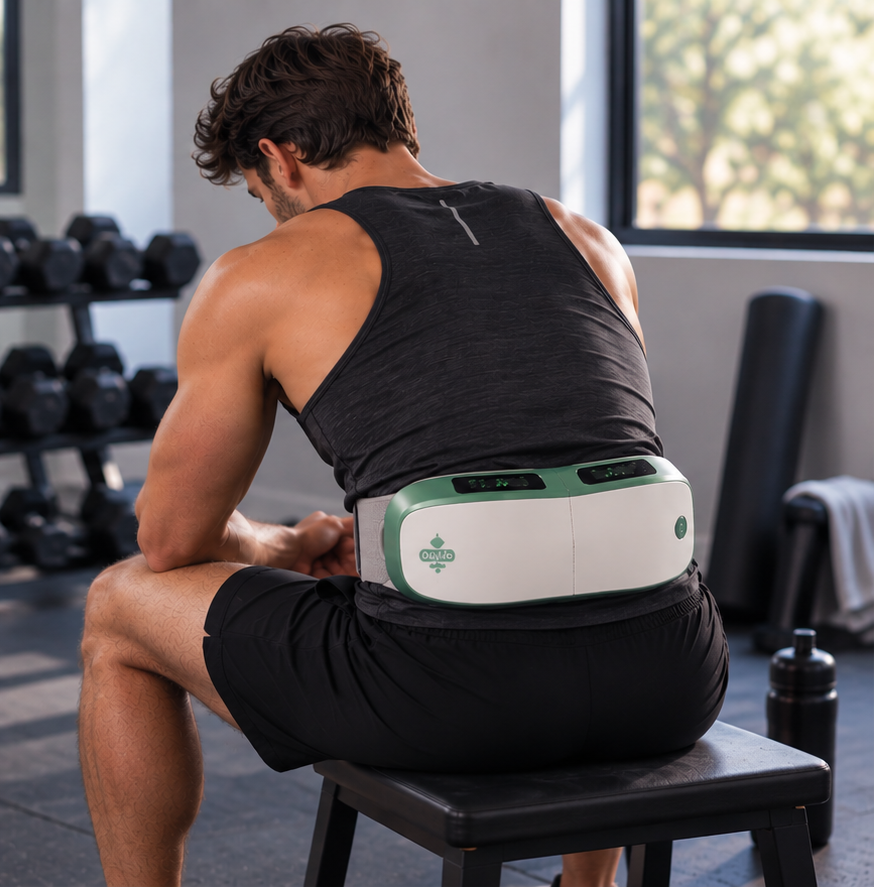
Muscle relaxation and circulation. Heat is a long-established tool for encouraging local blood flow and relaxing muscle tissue, and RF’s ability to generate that heat several millimeters beneath the skin is one of the reasons it’s used for muscle recovery and pain management, not only aesthetic purposes. Increased local circulation is thought to support the delivery of oxygen and nutrients to fatigued muscle tissue, while the heat itself can reduce muscle spasm and improve tissue extensibility, similar in principle to a warm compress, but generated more deeply and consistently.
An important distinction: wellness RF and RF ablation are not the same thing
This is worth stating plainly, because the two get confused often enough that it’s caused real anxiety in people who’ve done a quick search and stumbled on the wrong result.
Radiofrequency ablation, sometimes called radiofrequency denervation, is an invasive medical procedure performed under image guidance by a pain management specialist or interventional radiologist. It involves inserting a needle electrode directly to a specific nerve, most commonly the medial branch nerves around the spine’s facet joints, and applying RF energy hot enough to destroy that nerve’s ability to transmit pain signals. It’s used for specific, diagnosed chronic pain conditions, typically after other treatments have failed, and requires a referral, imaging and a clinical setting, with real risks and a real recovery period appropriate to the invasive procedure that it is.
Non-invasive radiofrequency therapy, the kind relevant to this page and to the Shaken Massager, does none of that. It’s applied through the skin’s surface, generates a controlled and comfortable warming sensation rather than destroying tissue, requires no needles, imaging or procedure room, and is designed for regular, low-risk, at-home or in-clinic use. The two share a name and an underlying energy source, radio waves, but they are different tools, built for different purposes, used in different settings, with different risk profiles. If you’ve heard concerning things about “radiofrequency” and pain, there’s a reasonable chance you were reading about ablation, not the wellness devices covered here.
What the research says
Pain and function across musculoskeletal conditions. A 2026 systematic review pooled results from 19 randomized controlled trials covering 911 participants, evaluating non-invasive radiofrequency therapy for a range of lower-limb musculoskeletal, neurological, and vascular conditions. The review found RF therapy generally associated with reduced pain compared to control conditions, though the authors were candid about substantial heterogeneity across the included studies, differences in device type, protocol and condition treated, which makes it harder to draw one precise conclusion about effect size (Read more here: García-Campanario et al., 2026, systematic review). That heterogeneity caveat is worth repeating: the overall direction of the evidence favors RF for pain, but the studies behind it aren’t uniform enough to promise a specific result for every condition or person.
Chronic low back pain. A randomized controlled trial assigned 62 people with chronic low back pain to either two weeks of capacitive resistive monopolar radiofrequency combined with proprioceptive neuromuscular facilitation exercises, or the exercises alone. The combined RF group showed significantly greater improvements across every outcome measured, including pain on the Visual Analogue Scale, functional disability on the Oswestry Disability Index, the Quebec Pain Disability Scale, and the Roland-Morris Disability Questionnaire, with differences large enough to exceed the minimal clinically important difference on each measure (Read more here: Jurak et al., 2025, Physiotherapy Research International). It’s one of the more directly relevant trials here, since it isolates RF’s added benefit on top of an active exercise program rather than testing RF alone.
RF as an established, familiar category. A separate 2026 study looked at patient satisfaction with 40.68 megahertz radiofrequency treatment in 76 patients, an application on the cosmetic and facial-rejuvenation side of RF’s use (Read more here: Shao et al., 2026, patient satisfaction study). That study doesn’t measure pain relief, so we’re citing it here for a different reason: it’s a useful reminder that RF already carries a long track record across aesthetic, physiotherapy and consumer-wellness applications, a familiar and well-studied technology rather than a novel one being tried for the first time.
Taken together, the research base for non-invasive RF is broader, and in places more rigorous, than some of the other modalities we cover, with real randomized trial evidence for pain and function. It has real limits too: heterogeneity across studies, a research base still concentrated in certain conditions, and a need for more large trials on handheld consumer devices specifically rather than clinic-grade equipment. We’d rather be upfront about where the evidence is strong and where it’s still developing than present it as more settled than it is.
Who should be cautious, and why
RF therapy is generally well tolerated, but there are specific situations where caution, or a conversation with a doctor first, is the right call.
Pregnancy. RF devices shouldn’t be used on or near the abdomen during pregnancy, and safety hasn’t been specifically established for pregnant users more broadly.
Metal implants and electronic medical devices. RF current interacts with metal and can interfere with pacemakers, defibrillators, cochlear implants and other implanted electronic devices, which should avoid RF entirely unless cleared by a doctor. Joint replacements and surgical hardware also warrant a conversation with a healthcare provider before use near the implant site.
Impaired sensation. Because RF works by generating heat, anyone with reduced sensation in the treatment area, from diabetic neuropathy, nerve damage or another cause, is at higher risk of a burn, since they may not feel the heat building to an unsafe level.
Active cancer or a history of skin cancer in the treatment area. Heat-based therapies aren’t recommended over an active tumor site or an area with a history of skin cancer without an oncologist’s input.
Recent surgery, open wounds or active skin infection. RF shouldn’t be applied over healing surgical sites, open wounds, active infections, or significant skin conditions until they’ve fully resolved.
Blood clotting disorders. As with several other modalities on this site, increased local blood flow near an existing clot carries real risk, so anyone with a clotting disorder or history of clots should get medical clearance first.
As always, check with your doctor if any of the above applies to you and refer to the safety guidance in your device’s manual.
Frequently asked questions
Is this the same as the radiofrequency treatment used for chronic pain injections? No, and this is worth repeating. RF ablation for chronic pain is an invasive, needle-based, image-guided procedure that destroys nerve tissue, performed by a specialist. The RF in the Shaken Massager and similar wellness devices is a non-invasive surface treatment that generates a comfortable warming sensation. They share an underlying energy type but are otherwise entirely different.
Does RF actually reach muscle or does it just heat the skin? Depending on the device, RF can reach several millimeters beneath the skin’s surface, into subcutaneous tissue and, with monopolar designs, deeper still. Consumer devices generally use bipolar or multipolar configurations that prioritize safety and comfort over maximum depth.
Is RF the same as infrared heat? No. Infrared heat warms tissue from the outside in, using light absorbed at the skin’s surface. RF generates heat within the tissue itself, through molecular friction, which is part of why it’s associated with a deeper, more consistent heating effect.
How hot does an RF device get and is that safe? Quality RF devices, including the Shaken Massager, include temperature sensors and automatic shut-offs to keep tissue in a safe, effective range. The temperatures associated with muscle relaxation sit well below the range associated with tissue damage.
Can I combine RF with percussion in the same session? That’s exactly how a combination device like the Shaken Massager is designed to be used, RF’s heating and circulation effects complementing percussion’s mechanical stimulation. See our vibration and percussion therapy article for more on that side of the device.
Where this fits alongside our other articles
The Shaken Massager’s two mechanisms, radiofrequency heat and mechanical percussion, are covered separately on this site because the research base behind each is genuinely distinct, but they’re designed to work together in the device itself. If you’re weighing the device as a whole, our vibration and percussion therapy article covers the mechanical side, including the evidence for muscle recovery and nervous system effects.
If you have questions about how RF and percussion work together, or want to see the Shaken Massager in person, you can get in touch for a Zoom call, an office visit, or a group demonstration.