Electromagnetic fields are everywhere and are a part of our everyday life. Some forms of electromagnetic energy are featured in medical and skin treatments, while others are generated by electrical appliances and wireless communications. So why are some applications considered beneficial while others raise health concerns? Let’s look at the differences between EMF vs PEMF.
The answer lies in how electromagnetic energy is delivered: its frequency, intensity, duration, location and the intended biological effect.
For example, pulsed electromagnetic field (PEMF) technology has been used for supporting bone healing, managing pain and assisting rehabilitation. Radiofrequency (RF) energy is also deliberately used in aesthetic (skin) treatments to heat selected layers of tissue and stimulate collagen remodelling.
Both illustrate how electromagnetic energy can be applied for a specific purpose under controlled conditions.
In contrast, environmental electromagnetic exposure from electrical infrastructure and wireless devices can be far from therapeutic. Scientists continue to investigate how long-term exposure may have adverse health effects.
The important question is not simply whether electromagnetic energy is good or bad. It is how it interacts with the body under different conditions.
What exactly is EMF?
EMF stands for electromagnetic field. These fields occur naturally, including the Earth’s magnetic field or they can be generated by electrical and electronic equipment.
Two common forms of human-made electromagnetic fields are:
- Extremely low-frequency (ELF) fields: Produced by electrical wiring, power lines and mains-powered appliances.
- Radiofrequency (RF) fields: Used for wireless communication and in certain medical and aesthetic technologies.
Although both are classified as non-ionising, their interactions with biological tissue differ considerably.
RF: One technology, different applications
Radiofrequency energy illustrates why electromagnetic fields cannot simply be classified as beneficial or harmful.
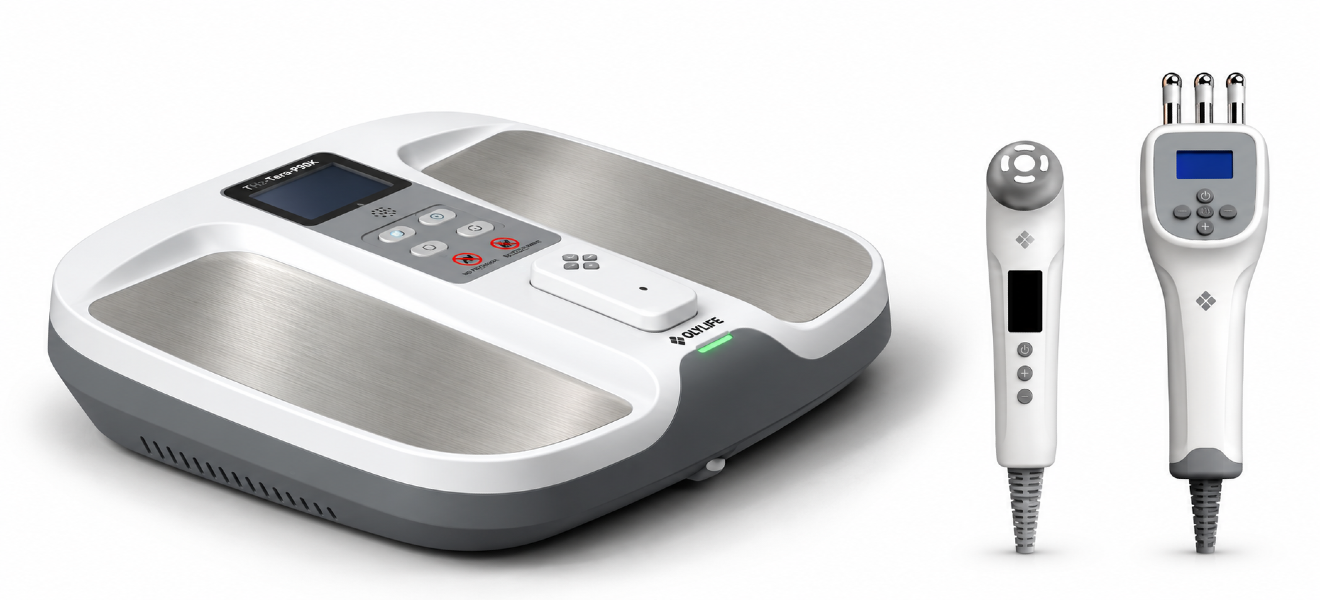
In aesthetic medicine, controlled RF energy is used to gently heat targeted tissue, encouraging collagen remodelling and improvements in skin firmness and texture. Examples of this are our Revitaluxe and Frost Age Beauty devices that come with the Tera-P90+ footpad.
A 2022 review by Vassão and colleagues (referenced below) examined 21 studies involving 354 participants and reported improvements in skin rejuvenation across different skin types. Treatment temperatures commonly ranged between 38°C and 44°C.
A larger systematic review published in 2025, covering 1,230 participants, also reported improvements in skin texture and firmness, with predominantly mild and temporary adverse effects. However, the researchers acknowledged limitations in the study quality.
These findings demonstrate that RF energy can have beneficial applications when appropriately controlled. They do not establish that all RF exposures are beneficial or that all RF devices give you equivalent results.
Environmental RF exposure from mobile phones, Wi-Fi and telecommunications infrastructure can create very different exposure conditions and must be evaluated using research relevant to those exposures.
Where do we find EMF in our everyday lives?
Inside our homes: Mobile phones, Wi-Fi routers, Bluetooth devices, computers, televisions, microwave ovens, induction cooktops, electric blankets, hairdryers, chargers, baby monitors and electrical wiring.
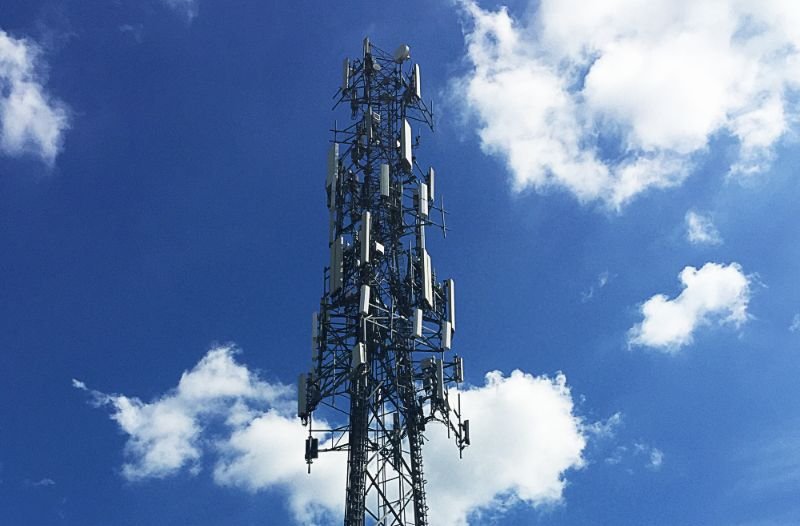
Outside our homes: Mobile phone towers, 4G/5G networks, electricity transmission lines, substations, broadcasting antennas, railway electrical systems and industrial equipment.
These sources operate at different frequencies and intensities so they don’t all produce the same biological effects.
What does research say about potential EMF harm?
At sufficiently high intensities, radiofrequency fields can heat biological tissue, while strong low-frequency fields can stimulate nerves and muscles. Researchers have also investigated whether prolonged exposure to lower-intensity electromagnetic fields may contribute to adverse health outcomes.
In 2010, Australian neurosurgeon Vini Khurana and colleagues reviewed ten epidemiological studies involving populations living near mobile phone base stations.
Eight studies reported increased prevalence of neurobehavioural symptoms or cancer among nearby populations. The researchers called for more comprehensive long-term investigations.
At Yale Medical School in June 2024, an international expert forum (the fourth forum) examined the public health and environmental implications of wireless radiation. Research associated with the forum challenged whether existing exposure standards adequately consider possible biological effects beyond tissue heating.
Other studies have reached different conclusions. A major 2024 systematic review found no evidence of increased childhood cancer risk from exposure to fixed-site transmitters, although the available evidence was limited.
Australian radiation safety authorities maintain that adverse health effects have not been established from low-level telecommunications exposure within current safety standards.
The scientific debate therefore concerns both the interpretation of existing evidence, who funded the study and whether current guidelines adequately address long-term exposure.
How is PEMF therapy different?
Pulsed electromagnetic field therapy uses deliberately generated magnetic pulses, delivered according to selected frequencies, intensities and treatment durations.
Unlike RF aesthetic treatments, which commonly rely on controlled tissue heating, PEMF therapies generally aim to influence biological processes without producing substantial heating.
Researchers have investigated PEMF’s effects on cellular signalling, tissue repair, inflammation and pain.
One established medical application is electromagnetic stimulation for certain fractures that have difficulty healing. A 2020 systematic review and meta-analysis reported improved fracture-healing rates among patients receiving PEMF treatment compared with controls.
PEMF has also been investigated for osteoarthritis. A 2024 systematic review reported encouraging improvements in pain and function, particularly for knee osteoarthritis.
PEMF is therefore a specific therapeutic application of electromagnetic fields, with clinical evidence that must be evaluated according to the device, treatment parameters and intended use.
How can we minimise unnecessary EMF exposure?
You can take practical steps to reduce exposure without abandoning all the useful technology.
Increase your distance
Use speakerphone or wired headphones during phone calls so the phone is not close to your head. Every time I see a teenager walking down the road, talking to a horizontal phone with the bottom end aimed directly in their ear, I can’t help but go up, interrupt them and tell them it is causing damage!
Position wireless routers away from beds and frequently occupied seating areas. I prefer to keep mine as far away as possible from the beds in the house and to turn them off at bedtime.
Reduce unnecessary transmission
Use aeroplane mode when wireless connectivity isn’t needed. Consider hard wired internet connections where you can.
Consider conductive shielding
Copper mesh and appropriately designed conductive fabrics can reduce radiofrequency transmission.
Their effectiveness depends on frequency, construction, coverage and installation. They are not necessarily effective against low-frequency magnetic fields.
What about orgonite?

Orgonite products typically combine resin, metal particles and crystals and are marketed as harmonising electromagnetic energy. Some pieces are literally marketed as “tower busters”. It’s very difficult to measure how effective each of these are when looking at them online or in a shop. Use a high integrity craftsman, such as Christina Lee Dobbs and use the EMF readers below to gauge the difference in output of radiation when the orgonite is close by, compared to further away.
I’ve bought pieces before which look very pretty but have little effect. This is usually determined by the amount of organic and inorganic layers they have built within. One pyramid I bought had a layer of metal at the top and the bottom, then all the middle layers were different coloured stones, organised like the rainbows of the body chakras. Like I said, very pretty but that only makes 3 layers.
Measure your environment
Consumer EMF meters can help you find sources of exposure and assess changes after you’ve moved the devices to a new spot or installing faraday fabric or copper shielding.
RF meters measure radiofrequency fields, while ELF meters measure low-frequency magnetic fields.
Measurements should be taken under comparable conditions, and the meter must cover the relevant frequencies.
A reduced reading demonstrates a change in the measured field, but does not independently establish a health benefit.
If you’re curious about electromagnetic exposure in your own environment, a suitable EMF meter can help you identify sources and compare readings before and after making changes. Choose a meter designed for the type of field you want to measure. Remember that the reading alone does not establish a health risk but, they can be useful in gauging how effective your orgonite, copper or other EMF eliminating devices are working.
Quality EMF and ELF readers on Amazon
As an Amazon Associate I earn from qualifying purchases.
Making informed choices around EMF vs PEMF
When summing up, EMF vs PEMF, electromagnetic energy cannot be meaningfully classified as universally beneficial or harmful.
Controlled RF energy has recognised applications in skin deep medicine. Specific PEMF technologies have established clinical uses and are being investigated for additional therapeutic benefits.
At the same time, questions about the long-term health implications of some environmental electromagnetic exposures continue to be studied. One day, someone might be bold enough to do something about it.
What matters is the type of energy, its strength, duration, delivery method and the scientific evidence for its effects.
Understanding these distinctions helps practitioners and consumers evaluate both therapeutic technologies and environmental exposure more accurately.
Scientific References and Further Reading
1. Khurana VG et al. (2010).
Epidemiological Evidence for a Health Risk from Mobile Phone Base Stations.
International Journal of Occupational and Environmental Health, 16(3), 263–267.
https://doi.org/10.1179/107735210799160192
2. Ben Ishai P et al. (2026).
Editorial: The 4th International Expert Forum on the Public Health and Environmental Impacts of Cellular and Wireless Radiation Exposure 2024.
Frontiers in Public Health.
https://doi.org/10.3389/fpubh.2026.1856852
3. Karipidis K et al. (2024).
The Effect of Exposure to Radiofrequency Fields on Cancer Risk in the General and Working Population: A Systematic Review of Human Observational Studies – Part I.
Environment International.
https://doi.org/10.1016/j.envint.2024.108983
4. Australian Radiation Protection and Nuclear Safety Agency (ARPANSA).
Mobile Phone/NBN Base Stations.
https://www.arpansa.gov.au/understanding-radiation/radiation-sources/mobile-phones-base-stations
5. Effectiveness of Pulsed Electromagnetic Fields on Bone Healing (2020).
Systematic review and meta-analysis.
https://pubmed.ncbi.nlm.nih.gov/32495506/
6. Current Evidence Using Pulsed Electromagnetic Fields in Osteoarthritis (2024).
Systematic review.
https://pmc.ncbi.nlm.nih.gov/articles/PMC11012419/
7. Perumalraj R et al. (2009).
Electromagnetic Shielding Effectiveness of Copper Core-Woven Fabrics.
The Journal of The Textile Institute.
https://doi.org/10.1080/00405000801997587
8. Vassão PG et al. (2022).
Radiofrequency and Skin Rejuvenation: A Systematic Review.
Journal of Cosmetic and Laser Therapy.
https://pubmed.ncbi.nlm.nih.gov/35856592/
9. Radiofrequency-Based Treatments for Facial Rejuvenation (2025).
A Systematic Review of Efficacy, Safety, and Patient-Centered Outcomes.
https://pmc.ncbi.nlm.nih.gov/articles/PMC12715571/
10. Shu et al. (2022).
Effectiveness of a Radiofrequency Device for Rejuvenation of Aged Skin at Home: A Randomized Split-Face Clinical Trial.
Dermatology and Therapy.
https://doi.org/10.1007/s13555-022-00697-y
Please note: the EMF reader links in this article have been researched for effectiveness and contain affiliate link information.